- New
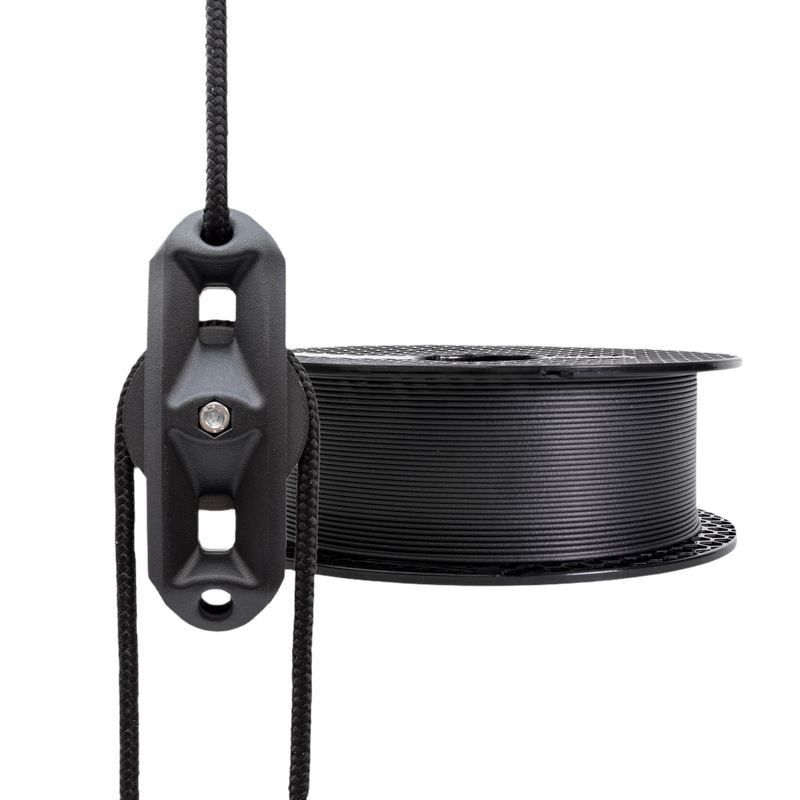

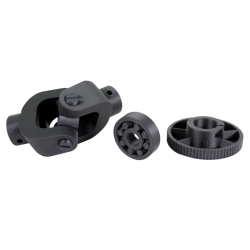
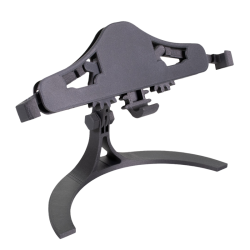
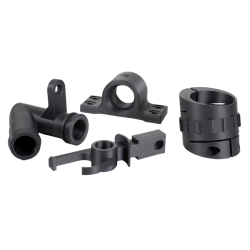
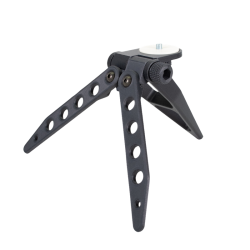
Prusament PC Blend Carbon Fiber (PCCF) is manufactured in-house by Prusa Research with a guaranteed ±0.04 mm diameter tolerance. Carbon fibers add stiffness and strength while improving dimensional stability and heat resistance up to 114 °C, making it well suited to functional parts that need to hold up under stress. Every spool is measured and documented throughout manufacturing, and this production data ships with the spool.
Enjoy free or discounted shipping when you buy 3 or more!
Discount applied automatically at checkout. Valid only for orders containing qualifying filaments. May ship in multiple packages. May ship from an alternate carrier.
Lower 48 USA = FREE
Other US States & Territories = $19.99
Canada = $29.99
Prusament PC Blend Carbon Fiber (PCCF) takes Prusa's in-house polycarbonate blend and reinforces it with carbon fibers, adding stiffness, toughness, and even more heat resistance. Compared to the standard PC Blend, it prints easier, holds its dimensions better, and stands up to UV light and everyday chemicals, while tolerating temperatures up to 114 °C straight off the printer (and as high as 130 °C after annealing). That makes it a strong choice for technical parts that have to stay rigid and stable under heat and load. Because the carbon fibers are abrasive, a hardened steel nozzle is required. Every 800 g spool holds a diameter tolerance of ±0.04 mm and ships with measurement data to back it up.
Prusament is made by the same team that builds Prusa printers, and all of it is manufactured in-house. Every spool is held to a ±0.04 mm tolerance with closely controlled color, and you can check that quality yourself along the entire length.

Prusa wasn't satisfied with the filament on the market, so they decided to make their own. Prusament is built to the standard a printer maker expects from the filament running through its own machines.

Prusament starts with premium-grade raw material, and every stage of production is monitored and tested for diameter, color consistency, and mechanical properties, so every spool that ships is right.

Each spool ships with its own production data, including diameter readings along the full length, total weight, and ovality. It's something no other filament maker provides, and it lets you confirm the quality yourself.
Made in the EU and USA
Prusament is made in Prusa's factories in the Czech Republic and Delaware, USA, not farmed out to an unknown supplier. Making it in-house means faster shipping, lower duties where they apply, and full control of the supply chain. No outside factory can quietly switch a raw material, so there are no surprise batch failures from a plant nobody has inspected.


Stronger, stiffer, and easier to print than plain PC
Blending carbon fibers into the polycarbonate base raises its strength, stiffness, and tensile performance while keeping the high impact and wear resistance PC is known for. The fibers also make the material easier to run than unfilled PC Blend, so you get demanding technical parts without the usual polycarbonate headaches. The trade-off is that PCCF is a little more brittle than standard PC Blend, and the carbon content gives it a clean matte black finish.
Holds up to 114 °C, or 130 °C after annealing
PCCF keeps its shape in heat up to 114 °C, so it's at home near motors, electronics, and other heat sources where PLA or PETG would soften and deform. If you need even more headroom, annealing the printed part pushes its temperature resistance up to around 130 °C. It's a dependable pick for thermally stressed components such as fan shrouds and other parts that have to keep working when things get hot.


Print large parts, no enclosure required
The carbon fibers give PCCF excellent dimensional stability, which means far less warping than you'd expect from polycarbonate. In practice you can print large models without an enclosure, something pure PC Blend struggles with, and its low creep means functional parts can go straight into working machines. It also offers good UV stability and resistance to common chemicals, and there's no need to dry the filament before printing.
Get the nozzle, sheet, and surface right
Because the carbon fibers are abrasive, a hardened steel nozzle is essential. Standard brass will wear out quickly. For bed adhesion, use a satin or powdercoated steel sheet and keep it clean. Wipe down with IPA on a paper towel while the sheet is cold. A hot sheet flashes the alcohol off before it can lift grease. Warm water with a drop of dish soap works as well. Take care, the heatbed runs at 110 °C for PCCF and can cause burns.
Avoid printing PCCF directly on a smooth PEI sheet. It bonds to that surface aggressively and can cause damage. If you need a smooth finish, lay down a thin layer of Kores paper glue stick first. Even on a satin sheet, a glue stick is worth using if you print PCCF often, as it protects the sheet from wear over time.

New spools with OpenPrintTag
From October 2025, every Prusament spool ships with a redesigned, fully rewritable NFC tag built on the OpenPrintTag standard.
The tag holds the filament's key details and can be read with the Prusa mobile app. It works fully offline, costs nothing to extend, and is open for anyone to build on.
Read more in Prusa's announcement article

You might also like
Prusament PC Blend Carbon Fiber (PCCF) is manufactured in-house by Prusa Research with a guaranteed ±0.04 mm diameter tolerance. Carbon fibers add stiffness and strength while improving dimensional stability and heat resistance up to 114 °C, making it well suited to functional parts that need to hold up under stress. Every spool is measured and documented throughout manufacturing, and this production data ships with the spool.
Enjoy free or discounted shipping when you buy 3 or more!
Discount applied automatically at checkout. Valid only for orders containing qualifying filaments. May ship in multiple packages. May ship from an alternate carrier.
Lower 48 USA = FREE
Other US States & Territories = $19.99
Canada = $29.99